
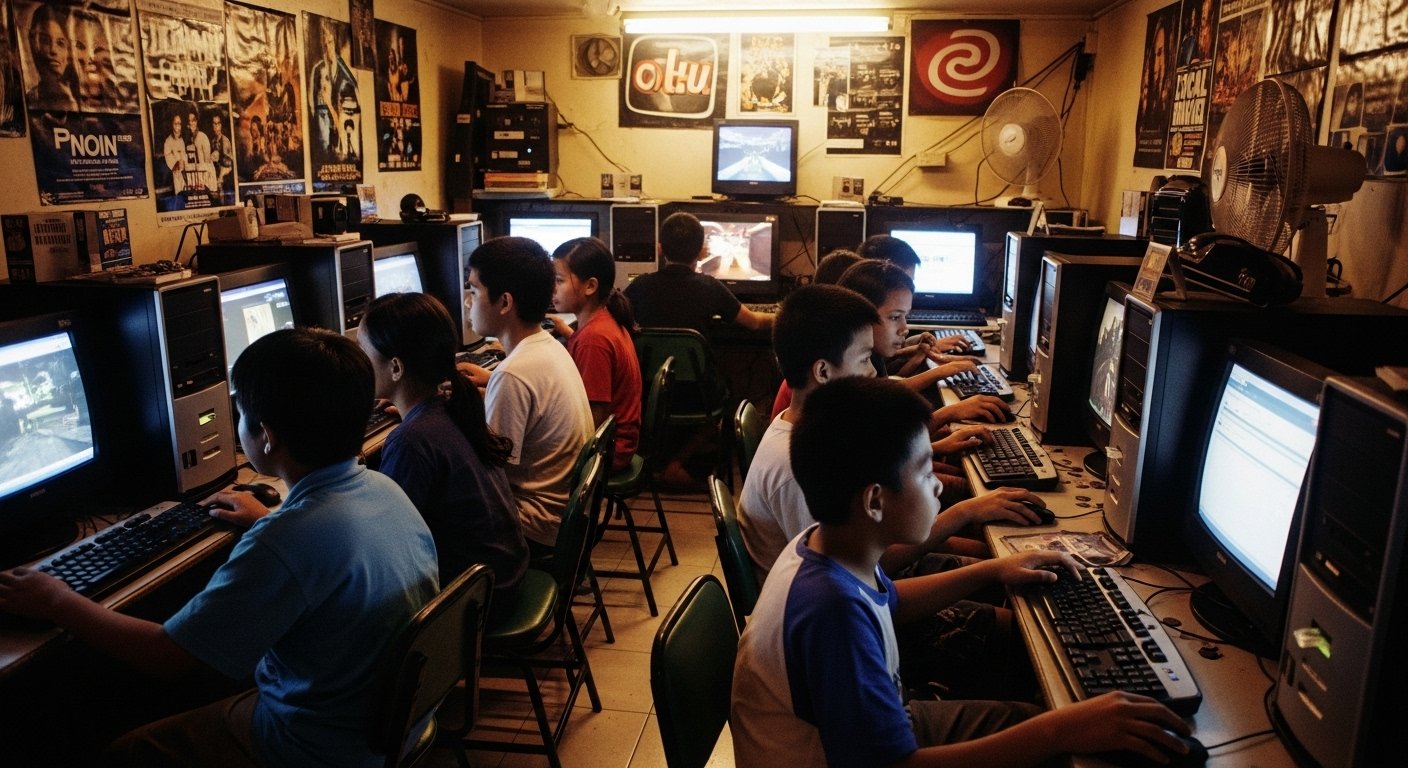
Before smartphones and unlimited Wi-Fi became common, pasonet transformed how people first experienced the internet in the Philippines. These coin-operated internet booths were lifelines for students, workers, and families who couldn’t afford home connections. Much like Filipino internet cafés, they offered prepaid browsing access that made the web affordable and easy to reach for everyone. For many, visiting these neighborhood computer shops meant exploring chatrooms, playing games, or completing school projects.
The model of pay-per-use online access also built a strong community browsing culture, where people learned, connected, and shared digital experiences together. To U.S. readers, it’s easy to compare them with early cybercafés, but with a unique twist—every minute online was purchased with coins. In this way, pasonet played a vital role in shaping early digital connections and bridging the gap toward affordable internet access in developing countries.
What is Pasonet?
Pasonet was more than just a way to browse the internet — it was a unique Filipino internet model that made going online affordable for everyone. At its core, it was a pay-per-session browsing system, often run through coin-slot computer stations placed in small shops or neighborhood stalls. People could insert a few coins to enjoy a few minutes of timed internet usage, making it possible for students, workers, and even kids to access the digital world without paying for expensive monthly plans.
Think of it as the internet version of a vending machine. Just like you put in coins for a soda, you could put in coins for prepaid web browsing. These booths became popular local cyber hubs, especially in communities where few families could afford home computers or broadband. The concept worked on a micro-transaction internet model, where every peso counted, but together it created a system of grassroots internet services that brought digital access to thousands.
To understand how coin-operated internet kiosks worked, imagine walking into a small shop with a row of computers. Each machine had a slot that accepted coins or tokens. Once you paid, the system unlocked the computer for a specific time — maybe 15 or 30 minutes. After that, the session would automatically end unless you added more money. This explanation of pay-per-use internet shows how even small contributions could add up, making the web accessible to people who might never have been able to use it otherwise.
The definition of prepaid online services through Pasonet was simple yet powerful: access for all, regardless of income. These public access computer systems were heavily used by students for research, by gamers who wanted to play with friends, and by workers who needed to check emails or apply for jobs. When we look at who used early Pasonet booths, the answer is clear — it was the everyday Filipino, from teenagers discovering online games to parents exploring the digital world for the first time.
More importantly, Pasonet offered digital access for low-income users, bridging a gap between the offline and online worlds. While it might seem basic by today’s standards of unlimited Wi-Fi, back then it was revolutionary. It gave people their first taste of the internet, often sparking curiosity, digital literacy, and even small entrepreneurial opportunities.
The Origins and Rise of Pasonet
The Birth of Coin-Operated Internet in the Philippines
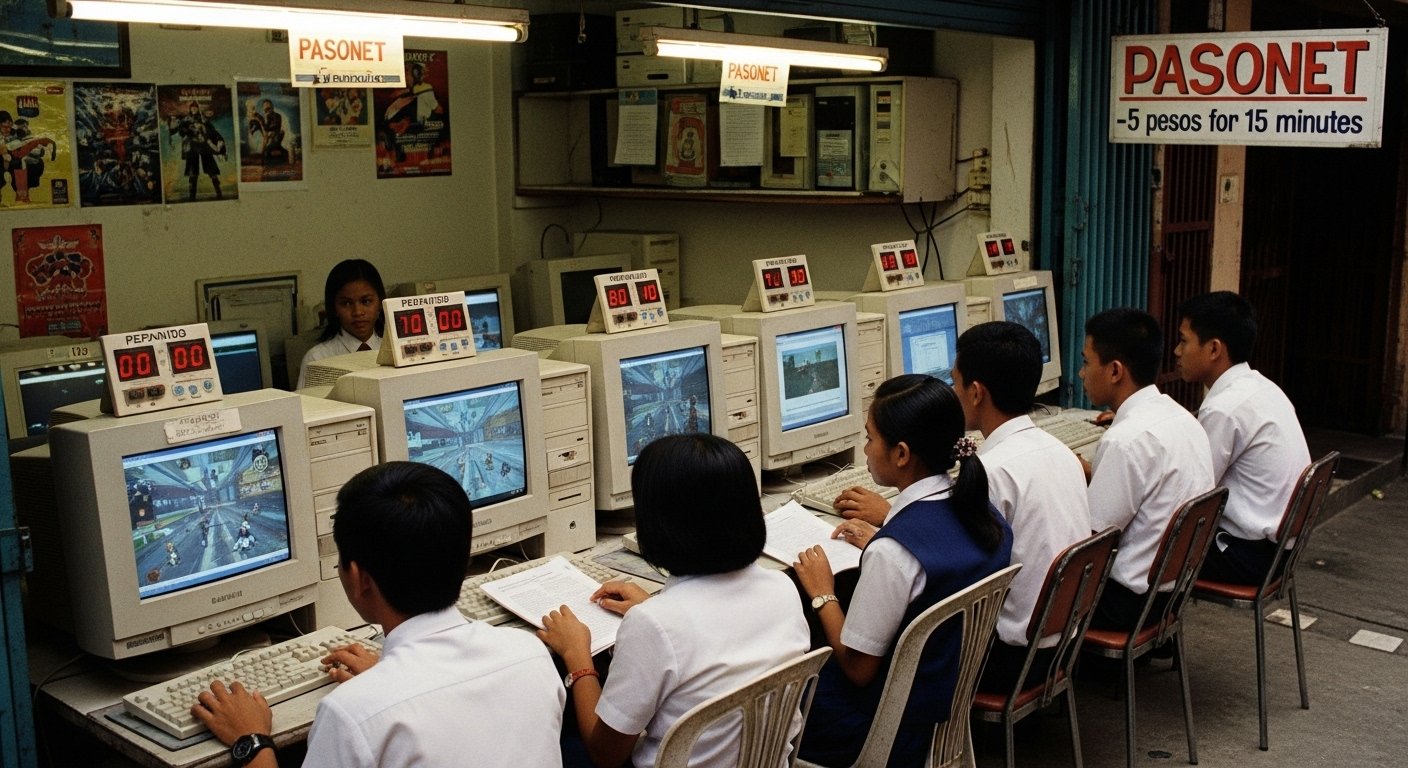
The story of Pasonet begins in the late 1990s, a time when home internet was still expensive and limited in the Philippines. Out of this gap came a Filipino tech innovation that would change the way ordinary people experienced the web. Small shop owners, often called local internet pioneers, began setting up coin-operated computers that allowed users to surf online for just a few pesos. This first appearance of prepaid internet booths became a game-changer in communities where people couldn’t afford their own PCs or monthly internet plans.
Unlike the bigger cybercafés, which charged by the hour, Pasonet worked like a vending machine for browsing. Insert coins, and the system would grant access for 15 to 30 minutes, depending on the price. This clever idea served as an early cybercafé alternative, offering prepaid connectivity origins at a fraction of the cost. The model fit perfectly with the cultural need for affordable access, especially in neighborhoods where owning a computer was a luxury.
These booths quickly became part of the grassroots internet history of the Philippines. Many small-scale computer operators started businesses with just a few units, helping entire communities take their first steps online. In a way, Pasonet was similar to 1990s digital startups—built from necessity, fueled by creativity, and designed to solve real-world problems. As a result, the history of pay-to-browse services in the country became a foundation for digital inclusion in the Philippines, giving low-income users their first taste of the internet.
The Boom of the Pasonet Era (1990s–2000s)
By the early 2000s, Pasonet had moved beyond being a small neighborhood project. It had turned into a nationwide wave that defined the peak internet café culture in the Philippines. Computers lined up in community gaming hubs and corner shops became social hotspots for students, who flocked to these places after school.
One major driver of this growth was education. Schools often lacked computer labs, so school-based browsing access through Pasonet kiosks became the go-to solution for research and projects. This marked the youth-driven digital growth of the era, as thousands of students discovered the power of the web through these machines. It wasn’t just about academics, though. The popularity of online gaming in shops like Ragnarok Online and Counter-Strike turned Pasonet into more than a tool—it became entertainment, community, and lifestyle.
The expansion of computer kiosks during this digital boom in urban areas was fast and widespread. For many families, it was cheaper to let kids use the widespread prepaid browsing services than to buy their own PC. This shift from home computers to kiosks created a shared culture where being online was no longer private but communal. Friends played together, students worked side by side, and communities learned as one.
For a generation, Pasonet meant opportunity. It was the affordable access for students and workers that laid the foundation for digital literacy in the Philippines. More than just machines with timers, these kiosks symbolized a collective leap into the information age.
Cultural and Social Impact of Pasonet

Pasonet as a Hub for Youth and Communities
During its peak, Pasonet was more than just a way to get online—it became one of the most important social internet spaces in Filipino neighborhoods. These coin-operated booths quickly turned into student gathering places, where young people spent their afternoons researching, chatting, or playing games together. The idea of prepaid internet wasn’t only about access—it was about building a community tech culture that connected people in meaningful ways.
Many teenagers experienced their first taste of digital life inside these digital hangouts. Whether it was sending an email, creating a Friendster account, or battling in an online game, the experiences often happened side by side. This created shared digital experiences that shaped friendships and even study habits. In fact, one of the strongest impacts was how young people bonded in kiosks, forming friendships not only online but also in person as they sat next to each other.
Pasonet also fostered peer-to-peer learning online. If one student figured out how to download a file or open a chat app, others around them quickly picked it up. This kind of community learning through shared computers encouraged collaboration and digital literacy. The role of prepaid internet in socialization can’t be overstated—it gave kids who couldn’t afford home internet the chance to stay connected, work on projects, and join the growing digital world.
For many, Pasonet was the internet for entertainment as well. Online gaming, music downloads, and chatting became part of everyday youth culture. These group activities in browsing centers meant that the internet wasn’t experienced alone, but as a shared cultural event. In this way, Pasonet became the internet as a community hub, shaping the social fabric of an entire generation.
The Symbolic Side of Pasonet in Filipino Identity
Beyond its practical use, Pasonet holds a deep cultural value as part of nostalgic Filipino internet culture. For many, it represents the first time they stepped into the digital world—a milestone in both personal and collective memory. This makes it part of the digital heritage of the Philippines, remembered as more than just a technology, but as a cultural phenomenon.
The symbolic online generation that grew up with Pasonet often recalls late nights in kiosks, saving coins for extra minutes, or rushing to finish a school project before the timer ran out. These memories form a cultural memory of early internet experiences, and they continue to be celebrated in online communities today. It explains why Filipinos look back fondly on prepaid internet, even if faster and unlimited access has replaced it.
In many ways, Pasonet served as national identity and technology working hand in hand. Just as America had its dial-up AOL era, the Philippines had its coin-slot kiosks. The symbolic value of digital access in the 2000s gave Filipinos not only connectivity but also pride in creating a community tech tradition that was uniquely theirs.
Today, when people talk about nostalgia for shared browsing experiences, they see Pasonet as a cultural time capsule. It captures a moment when the internet was new, exciting, and something to be shared. This Filipino memory of early digital culture continues to influence how technology is remembered and celebrated across generations.
The Economics of Pasonet Businesses
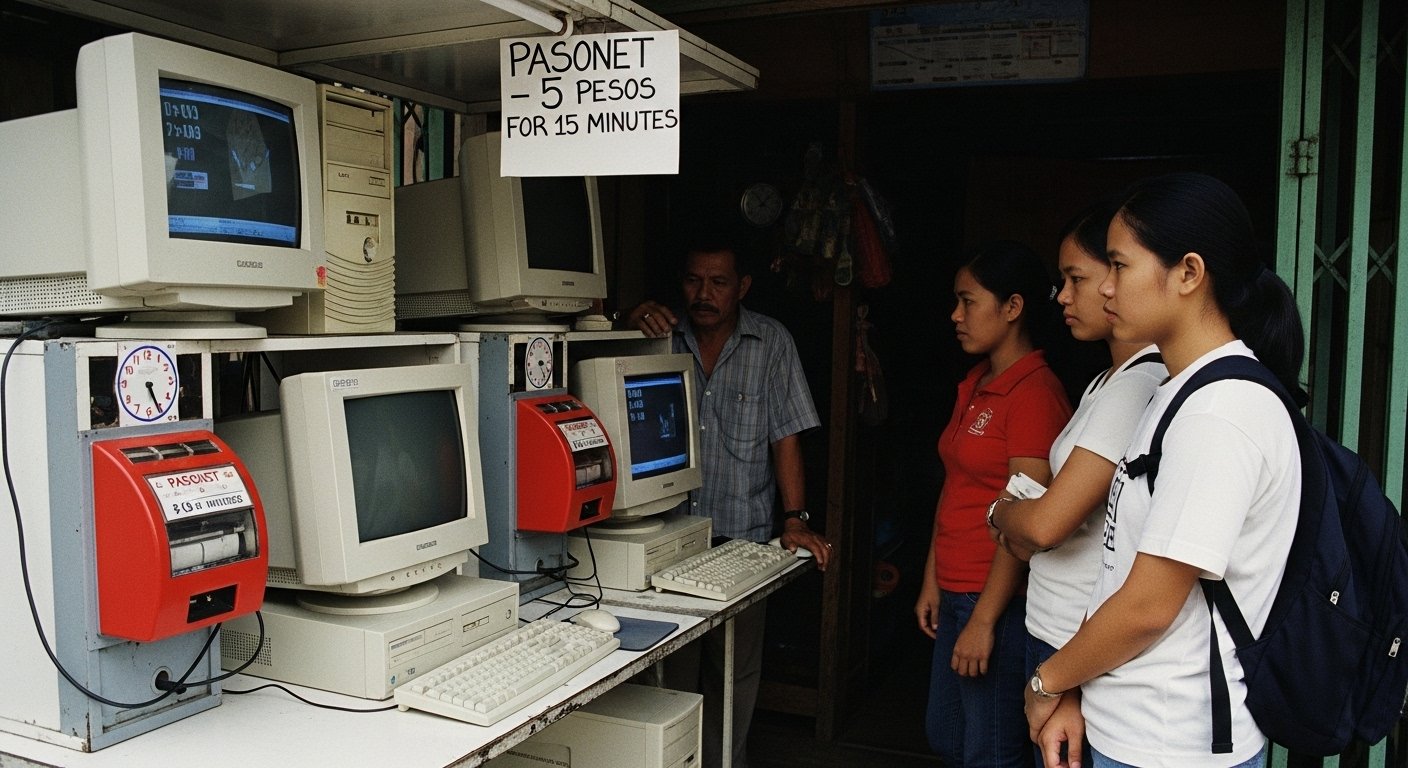
The rise of pasonet in the Philippines wasn’t just a story of technology—it was also about economics and survival. For many Filipinos, setting up small-scale internet enterprises became a practical way to earn income while meeting a growing community need. A single computer, a coin slot device, and a basic internet connection could be transformed into a microbusiness model that helped families sustain their livelihood.
One of the most fascinating aspects of Pasonet was how operators made money from prepaid internet. Instead of charging large hourly fees like traditional cafés, kiosks used a profit model of coin-slot browsing where people paid for minutes, not hours. This system kept costs extremely low, ensuring affordable online access for low-income families who could not afford monthly subscriptions. In effect, Pasonet became a neighborhood internet provider, helping bridge the gap between technology and those who needed it most.
For many local entrepreneurs, these kiosks represented community-based tech entrepreneurship. Operators often ran kiosks in front of their houses, in small stores, or even on sidewalks, proving that grassroots tech businesses didn’t need big investments to succeed. The economic role of small internet kiosks went beyond profit—it created jobs, supported households, and introduced communities to the digital world.
The affordable access economy fueled by Pasonet also demonstrated the democratization of internet access. By breaking down digital costs into pocket-sized payments, it made browsing possible for students, jobseekers, and families who only needed a few minutes online. These low-cost digital services allowed people to check emails, apply for jobs, or finish schoolwork without the burden of expensive monthly plans.
From a sustainability perspective, the prepaid browsing profits were small per session but added up quickly due to high demand. Kiosks often ran from morning until late night, filled with students, gamers, and casual users. This continuous flow of customers meant that even a few pesos per session created a steady income stream.
The Decline of Pasonet and Shift to Unlimited Internet
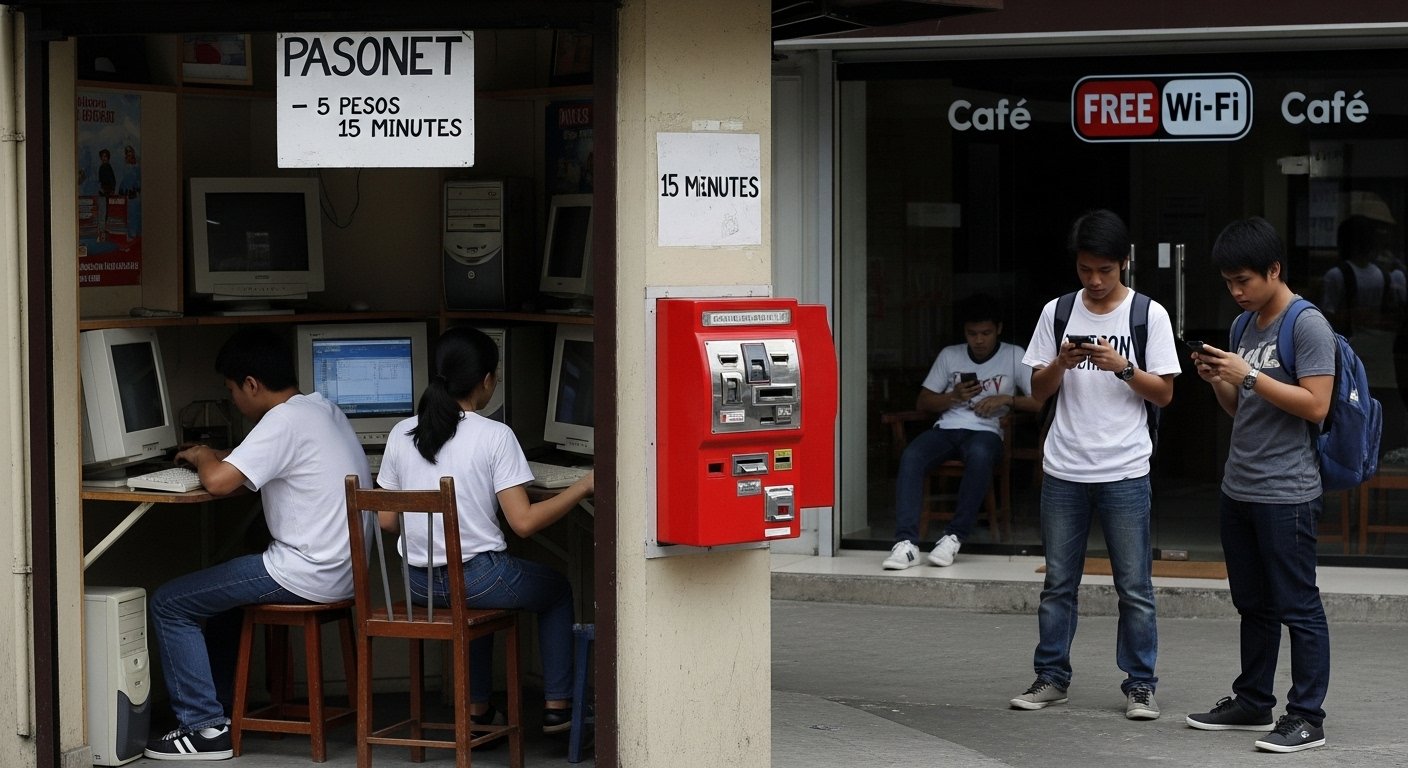
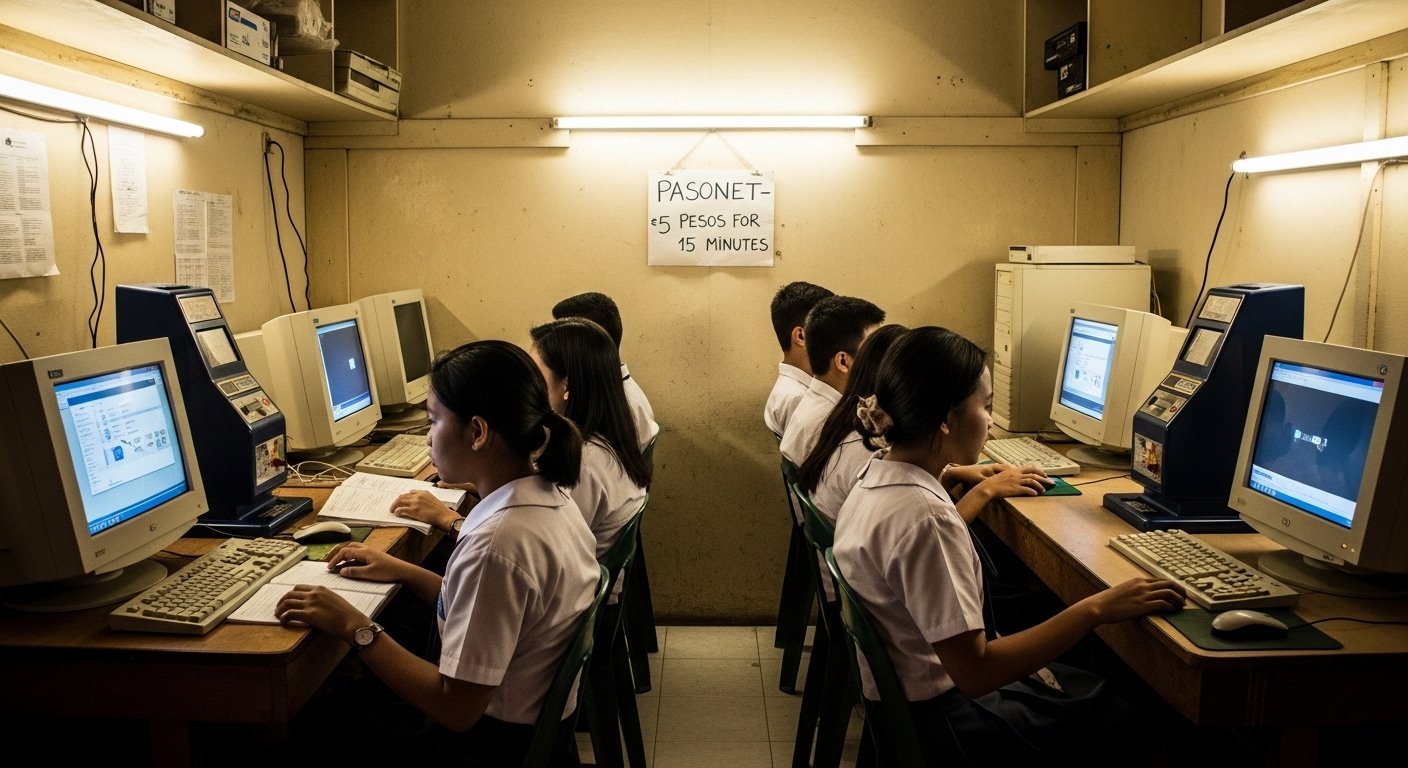
The story of pasonet is also the story of how technology evolves and replaces older models. What started as a lifeline for communities eventually faded as new forms of internet access emerged. By the late 2000s, the timeline of internet access upgrades was clear—what was once cutting-edge soon felt outdated.
The first major factor was broadband expansion. As internet providers began offering affordable broadband replacing kiosks, families slowly shifted to home-based connections. This allowed unlimited browsing without the pressure of time limits or the need to visit a shop. The prepaid model decline was inevitable because home connections offered both speed and convenience.
Another turning point was the rise of mobile data. The shift from kiosks to smartphones completely changed how people accessed the web. Instead of walking to a corner shop to check emails or browse, users could now connect instantly from their phones. Mobile data bundles gave people more freedom, making the old coin-slot browsing model feel restrictive.
The spread of Wi-Fi adoption also accelerated the end of coin-slot browsing. Cafés, malls, schools, and even public parks began offering free or low-cost Wi-Fi. This reduced the appeal of paying per session in a kiosk. The impact of Wi-Fi on community browsing was huge, as it moved social interactions from cramped kiosks to more open and comfortable spaces.
The transition to modern access was driven not only by affordability but also by speed. Many pasonet kiosks relied on older computers and slower connections. In contrast, technological evolution brought faster, more reliable, and always-on access at home or on the go. As a result, the decline of pay-per-use models was less about culture and more about practicality.
The Legacy of Pasonet in Modern Internet Culture
Nostalgia and Digital Memory
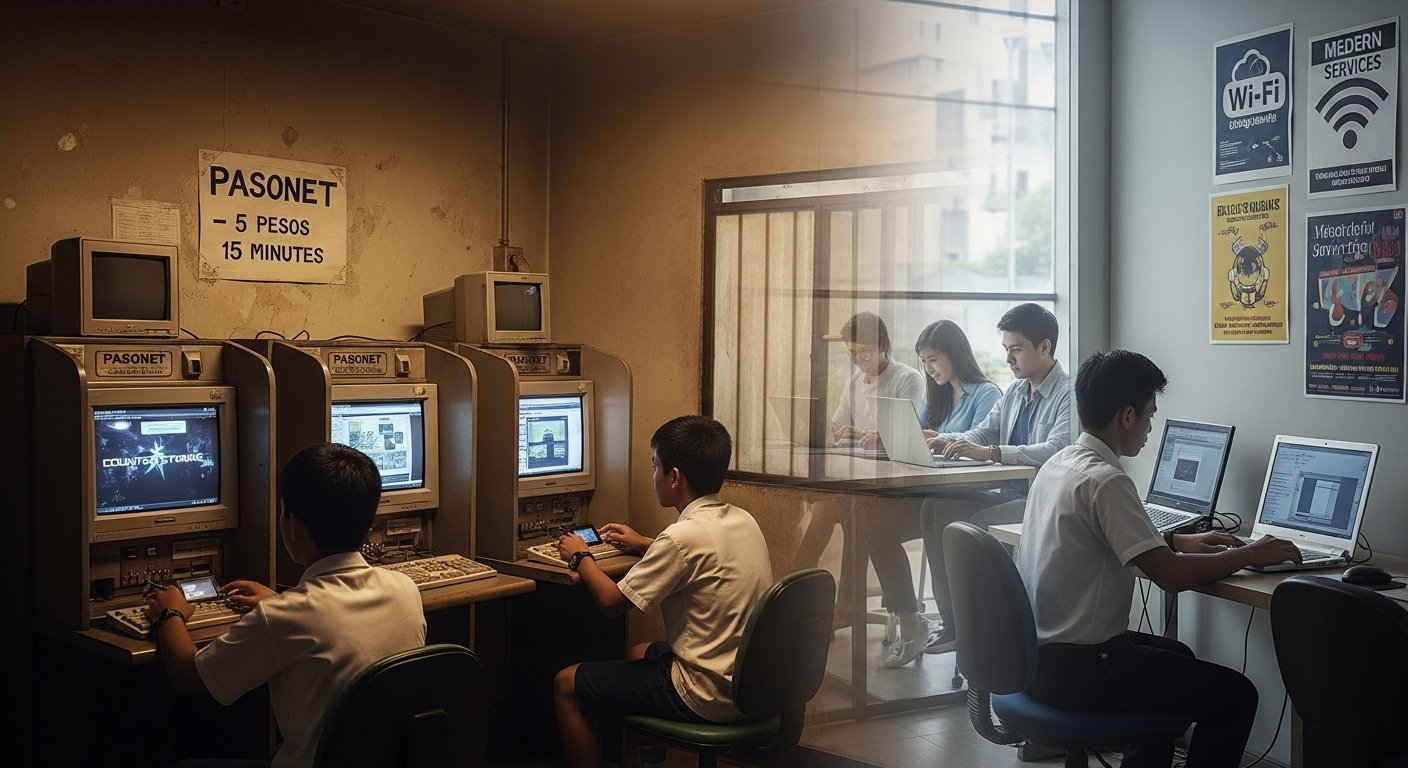
Even though pasonet kiosks are mostly gone, their spirit lives on in the hearts of many who grew up with them. For Filipinos, they are a symbol of retro internet culture, reminding people of a time when connecting online was both exciting and precious. This shared online nostalgia is often seen in stories, forums, and even social media posts where people laugh about their first email, their first online chat, or their late-night gaming marathons inside cramped booths.
For many, pasonet is part of the Filipino digital heritage, a marker of the early 2000s when the internet wasn’t yet everywhere. It represents the memory of early browsing and the joy of discovery, like finding a new game or chatting with a friend overseas. The cultural references to 2000s internet—the sound of coins dropping, the rush of opening Yahoo! Messenger, or playing Counter-Strike with classmates—have become iconic prepaid culture.
Today, this nostalgia is kept alive by internet nostalgia communities online, where people share memes and personal stories about the era. Much like vinyl records or retro gaming consoles, pasonet has turned into early digital era symbolism, something remembered not for its technology, but for its emotional value of shared internet history.
Lessons for Today’s Digital Economy
While pasonet may seem like a relic of the past, it holds surprising lessons for today’s world. Its model was built on microtransaction business models, where users paid only for what they needed. This idea is still alive in pay-per-use digital services, from cloud storage to gaming credits. The same principle of small, affordable access has carried over into today’s subscription-based access economy.
Modern co-working parallels also echo pasonet’s community-driven services. Just like students once crowded booths for group projects or gaming, freelancers and startups now gather in co-working spaces as modern kiosks, paying for shared resources instead of owning everything themselves. The digital sharing economy—whether it’s ride-sharing, Wi-Fi sharing, or cloud services—shows the same mindset of pooling resources for affordability.
Globally, prepaid Wi-Fi trends in rural or developing regions resemble the old kiosks too. Instead of home broadband, people still buy internet credits by the hour, keeping scalable tech models alive in underserved areas. This proves that what businesses can learn from prepaid internet is that accessibility and flexibility can sometimes be more valuable than speed or luxury.
Could Pasonet Make a Comeback?
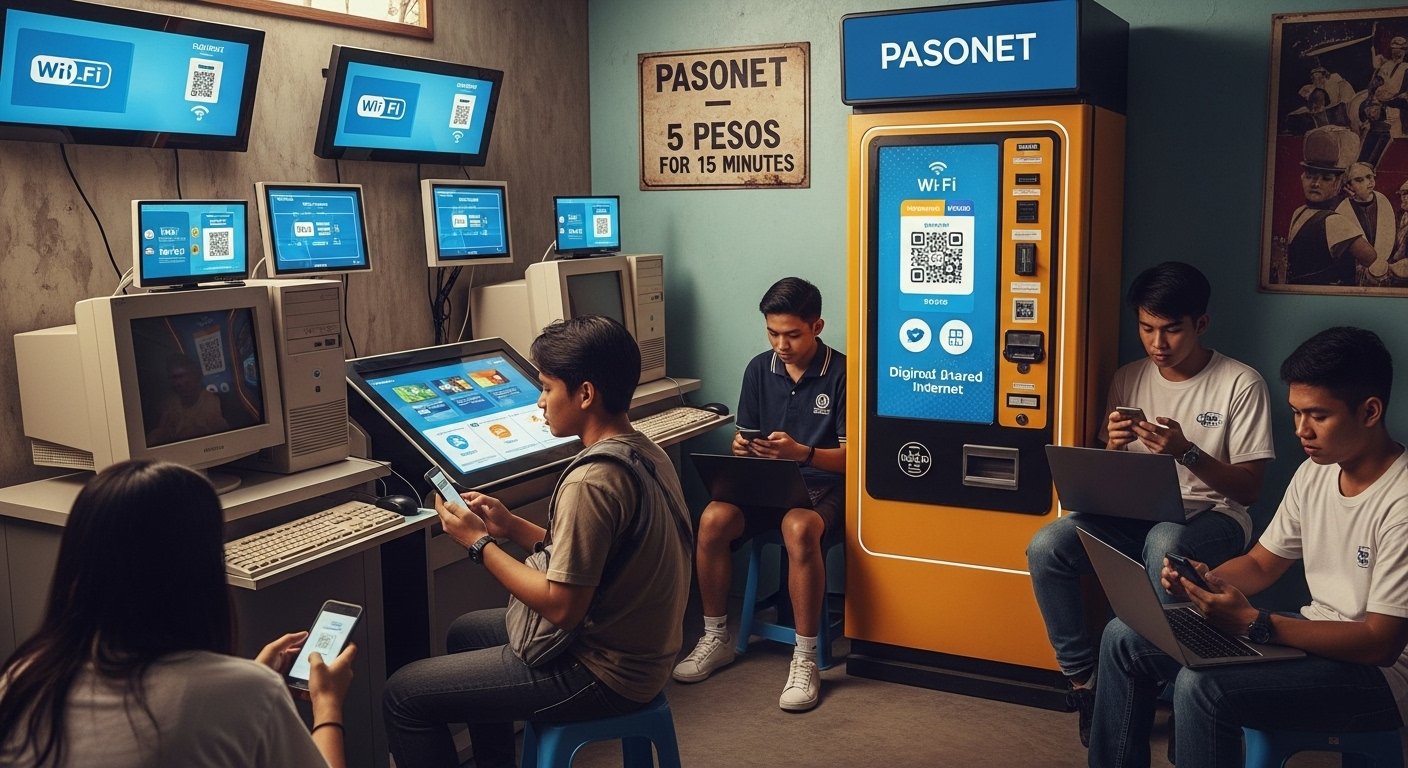
The question of whether pasonet could return may sound nostalgic, but it’s more relevant than many realize. While urban centers now enjoy fast home broadband and mobile data, there are still millions of people—both in the Philippines and worldwide—who struggle with reliable connections. For these underserved communities, a modernized version of the prepaid Wi-Fi kiosks once powered by coin-operated browsing could serve as a bridge toward digital inclusion strategies.
In rural areas or low-income neighborhoods, not everyone can afford unlimited monthly internet. A rural internet access model based on community internet hubs would allow users to pay only for what they need. This is similar to the affordable tech revival we see in parts of Africa, South Asia, and even possibility of prepaid Wi-Fi in rural America, where local kiosks or shared hotspots are gaining traction.
For a comeback to work, however, the system would need to evolve. Instead of bulky desktop computers, a future of coin-operated browsing could involve modernized access solutions like smartphone charging stations with prepaid Wi-Fi, or vending-style booths where people scan a QR code to unlock time-limited internet. These updated models could be integrated with digital wallets, making them easier and safer to use compared to dropping coins into machines.
Some of the potential benefits of a revival of shared internet access models include:
Affordability: Pay-per-use ensures people aren’t tied to expensive contracts.
Accessibility: Brings online resources to remote or poor communities.
Flexibility: Users decide when and how much to spend.
Community impact: Creates spaces for learning, gaming, and digital literacy.
At the same time, there are challenges. Potential comeback of pay-per-use access depends on sustainable business models, reliable infrastructure, and balancing security risks with convenience. Unlike in the 2000s, people today expect speed, privacy, and seamless access—so a direct copy of the old pasonet won’t work. It would need to adapt to current modern relevance of prepaid browsing while keeping costs low.
Conclusion
Looking back, pasonet is more than just an old way of going online—it carries an enduring digital legacy that continues to shape how we think about access and affordability today. As part of Filipino internet history, it showed how communities found creative ways to bridge the digital divide through simple, practical solutions. For many, it’s also a piece of cultural internet heritage, a reminder of late nights at computer shops, school projects done on limited time, and friendships built around shared screens.
The lessons from prepaid access remain highly relevant in our modern digital economy. Subscription models, microtransactions, and shared workspaces all echo the grassroots creativity of Pasonet. Its ongoing cultural influence and symbolic value in tech history prove that even the simplest ideas can leave a lasting mark on innovation. By remembering its impact on digital accessibility, we recognize not only the nostalgia but also the potential lessons it offers for underserved communities today. In the end, the story of Pasonet is a shared digital memory that continues to remind us why affordable, inclusive access will always matter in shaping the internet’s future.
FAQs about Pasonet
What is Pasonet and how did it work?
Pasonet was a coin-operated internet booth popular in the Philippines during the early 2000s. Users inserted coins to buy minutes of browsing time, making it one of the most affordable forms of public internet access points. It worked like a prepaid system, where once the time expired, the computer automatically logged out or shut down the connection.
Why was Pasonet so popular in the Philippines?
Pasonet became popular because it offered affordable internet access in developing countries where home broadband was expensive. Students used it for research, gamers for online play, and workers for communication. Its pay-per-use model matched the daily income of many households, making it a practical option before Filipino internet cafés and home connections became widespread.
When and why did Pasonet decline?
The decline of Pasonet began with the rise of mobile data and Wi-Fi adoption in homes and public areas. As smartphones became cheaper and broadband packages more accessible, the need for coin-operated kiosks faded. People preferred unlimited access at home or on the go, which made prepaid browsing models obsolete in most communities.
Could Pasonet make a comeback today?
A modern comeback is possible in underserved communities with limited broadband access. Updated versions of prepaid Wi-Fi kiosks could support schools, rural areas, and neighborhoods where reliable internet is still expensive. With digital inclusion strategies, Pasonet-style models might serve as affordable solutions until long-term infrastructure reaches these regions.
What lessons can today’s digital economy learn from Pasonet?
Pasonet’s prepaid browsing access model teaches valuable lessons about microtransactions and inclusivity. Just like today’s subscription services or app-based micro-purchases, it showed how people are willing to pay small amounts for short-term convenience. Businesses can learn from this digital sharing economy, especially when designing affordable access models for global audiences.
Is Pasonet considered part of Filipino digital heritage?
Yes, many consider Pasonet a key part of Filipino digital heritage. It represents the first internet experience for thousands of students, workers, and gamers in the early 2000s. Online communities often share stories of their first browsing moments, creating a shared cultural memory and nostalgia that connects to the early digital era symbolism.