
Have you ever wondered what makes certain tools and blades so incredibly tough and resistant to wear? Enter martensitic stainless steel, a powerhouse material in the world of metallurgy. This type of stainless steel stands out for its ability to be hardened through heat treatment, offering a unique blend of strength and corrosion resistance. Whether you’re in engineering, manufacturing, or just curious about materials science, understanding martensitic stainless steel can open up a world of insights into why it’s chosen for everything from kitchen knives to turbine blades.
In this comprehensive guide, we’ll dive deep into what martensitic stainless steel is, how it’s made, its key properties, popular grades, and real-world applications. By the end, you’ll have a clear picture of why this material is a go-to choice for demanding environments.
What Is Martensitic Stainless Steel?
Martensitic stainless steel is a category of stainless steel known for its high strength, hardness, and moderate corrosion resistance. It’s part of the broader stainless steel family, which includes austenitic, ferritic, duplex, and precipitation-hardening types. What sets martensitic stainless steel apart is its crystal structure – a body-centered tetragonal (BCT) lattice that forms through specific heat treatments. This structure gives it magnetic properties and the ability to be significantly strengthened, making it ideal for applications where durability is key.
Definition and History
At its core, martensitic stainless steel is defined by its composition and transformation process. It typically contains 11.5% to 18% chromium and 0.1% to 1.2% carbon, with iron as the base element. The name “martensitic” comes from the martensite phase, a hard microstructure formed by rapid cooling. Invented in 1913 by Harry Brearley, who was experimenting with chromium alloys to improve gun barrels, it gained traction in the 1930s and 1940s for industrial uses. Today, it’s essential in sectors requiring tough, heat-treatable materials.
But why does this history matter? It shows how martensitic stainless steel evolved from a niche discovery to a staple in modern engineering, adapting to needs like better wear resistance in tools.
Composition of Martensitic Stainless Steel
The chemical makeup is what enables its unique traits. Chromium provides the corrosion resistance, while carbon allows for hardening. Other elements like manganese, nickel, and molybdenum can be added for enhanced properties – for instance, nickel in grades like 431 improves toughness. Low-carbon variants (0.05-0.25%) offer better weldability, while high-carbon ones (0.61-1.50%) excel in strength but are more brittle.
Imagine building a bridge: you’d want a material that’s strong yet resistant to rust. Martensitic stainless steel’s composition strikes that balance, though it’s not as corrosion-proof as austenitic types.
How Is Martensitic Stainless Steel Processed?
Processing is where the magic happens. Unlike other steels, martensitic stainless steel responds dramatically to heat treatment, transforming its microstructure for superior performance.
Heat Treatment Processes
The key steps include austenitizing, quenching, and tempering. First, the steel is heated to 925-1070°C to form austenite, a face-centered cubic structure. Then, it’s rapidly quenched in oil, air, or water to create martensite – a diffusionless transformation that locks carbon atoms in place, boosting hardness. Finally, tempering at 200-600°C reduces brittleness and relieves stress, improving ductility without sacrificing too much strength.
Annealing is another process, heating below critical temperatures to soften the material for easier forming. Why go through all this? It allows customization – think of it like baking a cake where timing and temperature dictate the final texture.
Formation of Martensite
Martensite forms during quenching when the austenite cools below the martensite start temperature (around 300-400°C). This shear transformation distorts the lattice, creating a hard but brittle phase. In additive manufacturing, parameters like laser power control grain structure to minimize defects.
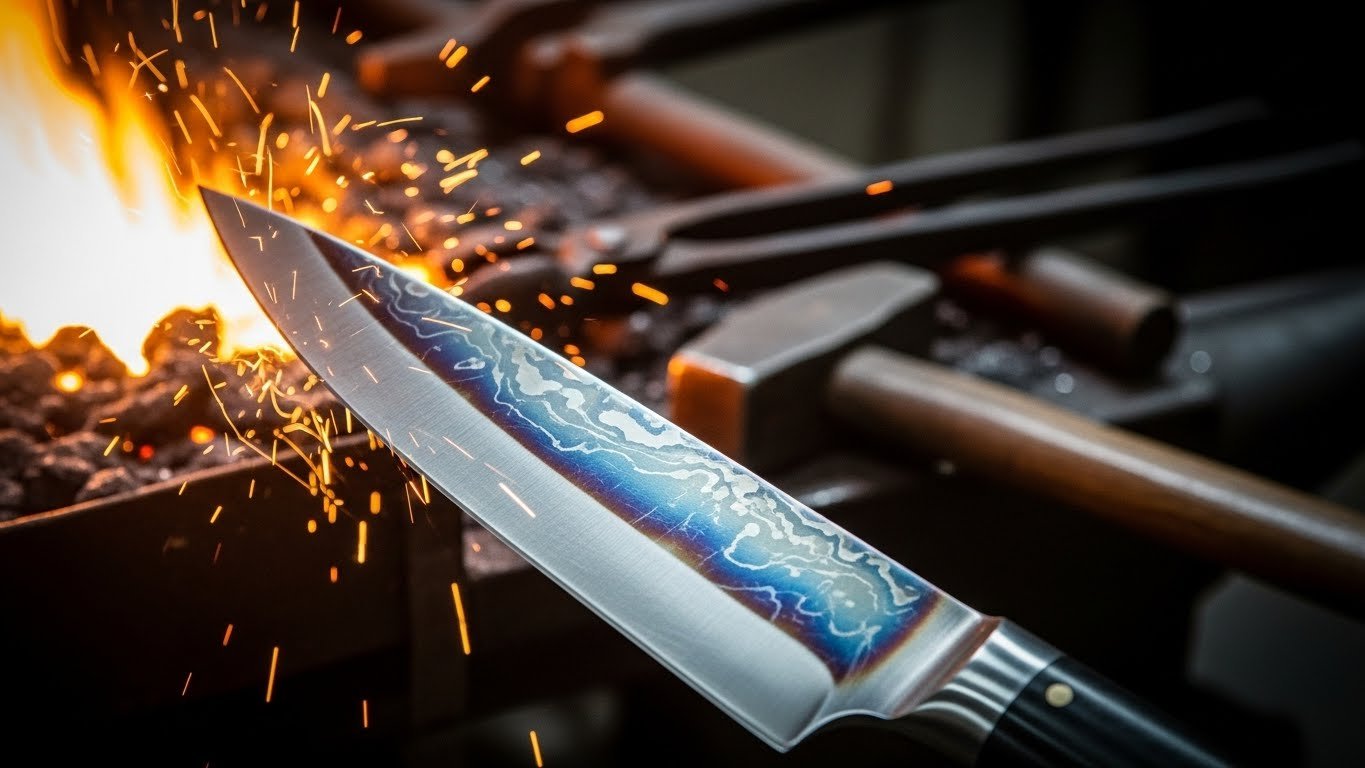
Ever seen a blacksmith quench a blade? That’s a basic version of this process, turning soft metal into something razor-sharp.
Key Properties of Martensitic Stainless Steel
What makes martensitic stainless steel shine? Its properties are tailored for high-stress applications.
Physical and Mechanical Properties
Physically, it has a density of about 7,800 kg/m³ and appears silver-gray. Mechanically, tensile strength ranges from 70,000 to 286,000 psi, with hardness up to 60 HRC after treatment. It’s strong but can be brittle if not tempered properly.
For example, in a turbine blade, high strength prevents deformation under extreme forces.
Chemical Properties and Corrosion Resistance
Corrosion resistance is moderate due to lower chromium compared to other stainless steels. It’s best in mild environments but can rust if not maintained. Heat resistance holds up to 600°C.
Question: Does it outperform carbon steel? Yes, thanks to chromium, but it’s no match for harsh chemicals like those in marine settings.
Magnetic Properties
Unlike austenitic stainless steel, martensitic is magnetic due to its iron-rich structure. This aids in sorting but can complicate welding.
Common Grades of Martensitic Stainless Steel
Grades vary by carbon content and additives, each suited to specific needs.
Low-Carbon vs. High-Carbon Martensitic Steel
Low-carbon (0.05-0.25%) grades like some 410 variants offer better corrosion resistance and formability. High-carbon (0.61-1.50%) ones, like 440, are harder but brittle.
Popular Grades: 410, 420, 440, and More
- 410 Stainless Steel: General-purpose, with good corrosion resistance; used in valves and fasteners. Tensile strength up to 110,000 psi.
- 420 Stainless Steel: Higher carbon for hardness (RC40-50); ideal for surgical tools and cutlery.
- 440 Stainless Steel: Top hardness (over RC50); for blades and bearings.
Other grades include 431 (with nickel for toughness) and 17-4 PH (precipitation-hardening for extra strength). Grade 1.4418 boasts the highest corrosion resistance among martensitics.
Choosing the right grade? It depends on your needs – hardness for knives or toughness for shafts.
Applications of Martensitic Stainless Steel
From everyday items to high-tech gear, this steel is versatile.
In Cutlery and Kitchenware
High-carbon grades like 420 and 440 make excellent knives due to edge retention and wear resistance. Why? They stay sharp longer than softer steels.
Medical and Surgical Instruments
Used in scalpels and dental tools for sterility and durability. Its hardenability ensures precision.
Aerospace and Automotive
Turbine blades, shafts, and fasteners benefit from strength and heat resistance. In cars, it’s in engine components.
Industrial and Other Uses
Valves, pumps, bearings, and springs in oil & gas, power generation, and defense. Its balance of properties makes it indispensable.
Advantages and Disadvantages of Martensitic Stainless Steel
Pros: High strength, good wear resistance, heat treatable, moderate corrosion in mild settings, cost-effective.
Cons: Poor weldability, brittleness at low temps, limited corrosion in harsh environments, requires precise treatment.
Weigh these based on your project – great for tools, less so for chemical exposure.
Comparison with Other Stainless Steel Types
How does it stack up?
Vs. Austenitic Stainless Steel
Austenitic (e.g., 304) is non-magnetic, highly corrosion-resistant, and weldable but can’t be heat-hardened like martensitic. Martensitic is harder but less ductile.
Vs. Ferritic Stainless Steel
Ferritic has better corrosion resistance but lower strength; both magnetic, but martensitic hardens via treatment.
Vs. Duplex and Precipitation-Hardening
Duplex offers superior corrosion; PH steels are stronger via precipitates but more expensive.
Welding and Fabrication of Martensitic Stainless Steel
Welding is tricky due to cracking risks; preheating and post-weld treatment are essential. Formability is limited, especially in hardened states.
Maintenance and Care for Optimal Performance
To prevent rust, clean regularly and avoid harsh chemicals. Proper heat treatment maximizes corrosion resistance.
Conclusion
martensitic stainless steel is a versatile material that excels in applications demanding high hardness and strength. From its heat-treatable nature to its wide range of grades, it continues to play a vital role in industries worldwide. If you’re selecting materials for a project, consider its unique properties – it might just be the perfect fit.
Explore More Topic: Asbestlint
FAQ
What is the difference between martensitic and austenitic stainless steel?
Martensitic stainless steel is magnetic, heat-treatable for high hardness, and has moderate corrosion resistance, while austenitic is non-magnetic, more corrosion-resistant, and better for welding but can’t be hardened the same way.
Is martensitic stainless steel magnetic?
Yes, due to its iron-rich martensitic structure, it’s ferromagnetic in both annealed and hardened conditions.
Can martensitic stainless steel rust?
Yes, it can rust in harsh environments because of its lower chromium content compared to other stainless steels, though it’s resistant in mild conditions if properly maintained.
What are common applications of martensitic stainless steel?
It’s used in cutlery, surgical instruments, turbine blades, valves, bearings, and automotive parts for its strength and wear resistance.